

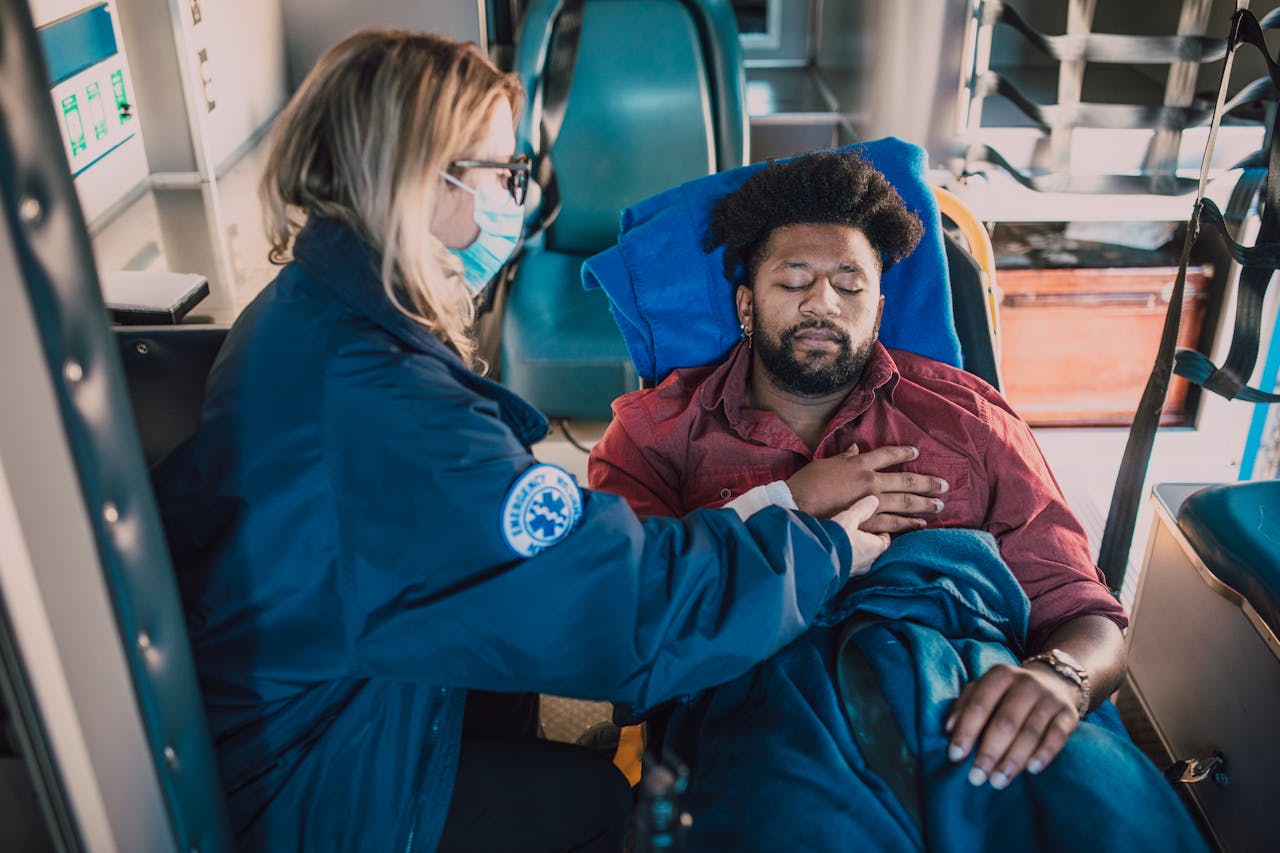
In the face of sudden pain or fear, it can be difficult to think clearly. You may be wondering whether you should drive to the emergency room, call for an ambulance, or wait a little longer.
That uncertainty is stressful, and it’s something many people face at least once in their lives. Knowing when to go to the ER vs call 911 can help you act faster and feel more confident when it matters most.
At Langdon Prairie Health, we recognize the stress that these decisions can cause for patients and their families in our community. That’s why we’re sharing clear, helpful guidance you can trust.
Here are the 12 signs that signal it’s time to go to the Emergency Room, and when calling 911 is the safest choice, so you can take action quickly and feel supported by care that’s close to home.
Chest pain isn’t always sharp. It may feel like squeezing, fullness, or discomfort that persists. Pain may spread to your arm, neck, jaw, or back.
If chest pain is accompanied by sweating, nausea, or shortness of breath, call 911 immediately. These can be signs of a heart attack, and fast treatment matters.
Struggling to breathe, wheezing, or feeling like you can’t catch your breath needs immediate attention. Breathing problems can worsen quickly, especially if caused by asthma, infection, or heart issues.
Sudden weakness on one side of the body, trouble speaking, blurred vision, or facial drooping are serious warning signs. Strokes need quick treatment to reduce long-term damage. Call 911 right away.
If someone faints, collapses, or can’t be awakened, emergency care is necessary. This could point to heart problems, low blood sugar, or head injury.
Bleeding that doesn’t slow after applying firm pressure for several minutes needs emergency care. Severe blood loss can become dangerous quickly.
Head injuries should never be taken lightly. Call 911 if there is confusion, repeated vomiting, severe headache, or trouble staying awake after a blow to the head.
These situations still require urgent medical care, but you may be able to safely get to the ER on your own or with someone’s help:
A fever above 103°F in adults or any fever with a stiff neck, rash, or confusion should be checked. Fevers that don’t respond to medication may signal infection.
Ongoing or worsening stomach pain can point to problems like appendicitis, gallbladder issues, or infection. If pain is intense or paired with fever or vomiting, go to the ER.
Repeated vomiting or diarrhea can lead to dehydration, weakness, and electrolyte imbalance. The ER can provide fluids and relief when symptoms won’t stop.
If you can’t move a limb, see obvious swelling, or feel severe pain after an injury, the ER can check for fractures and provide proper treatment.
Hives, swelling of the lips or throat, or difficulty swallowing should be taken seriously. Even if breathing is okay at first, symptoms can escalate.
New confusion, memory loss, extreme drowsiness, or unusual behavior can signal an infection, low oxygen levels, or neurological issues. These changes should be evaluated right away.
In times of urgency, it's helpful to know where to turn for assistance. At Langdon Prairie Health, our emergency room is open 24 hours a day, every day of the year.
Our team is here to address urgent medical needs, stabilize serious conditions, and arrange transfers to higher-level care when necessary.
As a Level V trauma center, we also work closely with local ambulance services to respond quickly and support our community when it matters most.
If you or someone with you needs emergency care, call 911 right away or go directly to our ER at 909 2nd St, Langdon, North Dakota.
If you have questions or need help understanding your care options, please don't hesitate to contact us. We’re here to support you with steady care, clear guidance, and a team you can trust right here at home.
Q: What’s the difference between when to go to the ER vs calling 911?
A: Calling 911 is the right choice when symptoms are sudden, severe, or life-threatening, such as chest pain, trouble breathing, or signs of a stroke.
Emergency responders can initiate care en route to the hospital. Going to the ER is appropriate when you need urgent medical care but can safely get there on your own.
Q: Is the Langdon Prairie Health ER open all the time?
A: Yes. Langdon Prairie Health offers 24-hour emergency care every day of the year. Our emergency room is always staffed and ready to help with urgent medical needs.
Q: What does it mean that the ER is a Level V trauma center?
A: A Level V trauma center is equipped to provide initial evaluation, stabilization, and emergency care for injured patients.
If higher-level care is needed, the team coordinates safe and timely transfers to larger facilities.
Q: Should I worry about going to the ER if I’m not sure it’s an emergency?
A: If something feels wrong or symptoms are getting worse, it’s okay to seek care. You’re not wasting anyone’s time. Trusting your instincts is an important part of protecting your health.
 HIPAA SUBSTITUTE NOTICE